
In the vast majority of areas the drain valve on a tank tee or manifold is a standard Sediment Faucet (aka Boiler Drain) which has a garden hose thread on the outlet for attaching a hose when the tank needs to be changed or drained. However, in some areas the local plumbing code requires the installation of a “Sampling Faucet.”
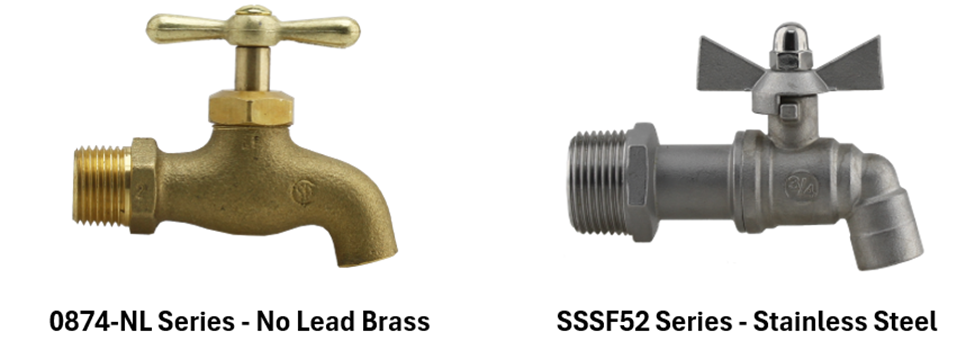
While Federal regulations do not apply to private drinking water wells, many U.S. states and local jurisdictions mandate the installation of a dedicated sampling faucet (or sample tap) in their well construction and pump installation codes to ensure safe and accessible water testing. These faucets are required to be installed upstream of the pressure tank and any water treatment equipment so that water samples can be collected directly from the well.
To the best of our knowledge…
- Wisconsin: Legally required for all pressure water systems; a metal, downturned sample faucet must be installed upstream of the pressure tank and any treatment, typically at least 12 inches above the floor.
- Michigan: The Water Well Construction Code requires a smooth-nosed, downturned sampling faucet (at least 8 inches above the floor) near the well or pressure tank.
- Illinois: State law dictates that a smooth-nosed, down-turned sampling faucet must be installed between the well and pressure tank, not less than 18 inches above the floor.
- New Jersey: Requires new public water systems to install a groundwater source tap on each well. New Jersey also mandates the sampling of private wells for certain contaminants during property transfers or real estate leases under the Private Well Testing Act.
- Minnesota & Maryland: Both states have established comprehensive private well safety regulations that require water testing access/documentation, particularly when selling or transferring a property.
- Iowa: State environmental regulations require that sample taps be provided to allow for the collection of water samples before it passes through any water treatment equipment.
- Other Jurisdictions (e.g., California/Michigan): While some states leave private well construction mostly to local county health departments, regions like San Diego County (California) or specific Michigan municipalities routinely require sampling access ports for new well permits or property transfers.
If your area requires the installation of use of a sampling faucet, the taps must be smooth-nosed (meaning without threads), be made of metal, and be installed upstream of filters, water softeners, and the pressure tank. This will guarantee that you are sampling the raw groundwater rather than water that has been altered by your in-home water treatment system, preventing bacterial contamination and ensuring highly accurate water quality testing.
You can consult the Water Systems Council State Codes to look up your specific locations plumbing and well mandates, as codes vary at the municipal and county levels.