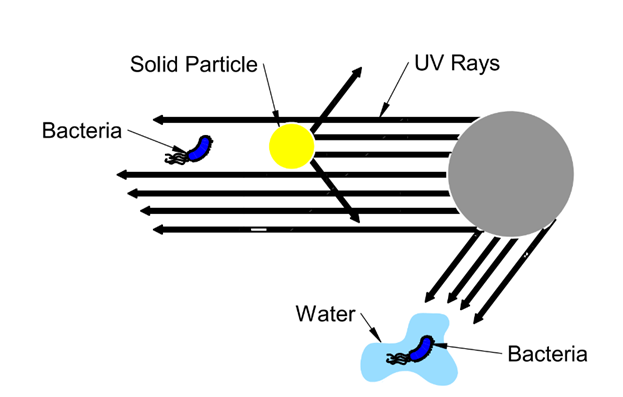
The industry standard is to install a 5-micron sediment filter before a UV water treatment system. The sediment filter removes dirt, sand, rust, silt, and other suspended particles that can interfere with UV treatment by shielding microorganisms from the UV light. Proper pre-filtration helps maintain UV system performance and can also reduce buildup on the UV quartz sleeve.
Always follow the pre-filtration recommendations provided by the UV system manufacturer. While most systems specify a 5-micron sediment filter, some manufacturers may require a finer 1-micron cartridge depending on the design of the system and the quality of the incoming water. Failure to follow the manufacturer's recommendations may affect system performance and could void the warranty. Always review the manufacturer's installation and warranty requirements before selecting a pre-filter.
Proper Filter Sizing
Be sure to select a filter cartridge that is large enough to provide the required flow rate without causing excessive pressure loss. As a general guideline, the filter should have a clean flow rate capacity of at least twice the desired system flow. Depending on the water quality, a flow capacity of 1.5 times may be adequate for light sediment conditions, while up to 3 times may be recommended for heavy sediment loads. The goal is to have a sediment cartridge last between 4 and 6 months before a change out is required. If a cartridge with too low a flow capacity, more frequent change outs may be required.
Heavy Sediment Applications
If your water contains large amounts of sand, grit, or other visible sediment, installing an additional coarse pre-filter ahead of the 5-micron sediment filter is recommended. This first-stage filter removes larger debris and helps extend the life of the finer sediment filter while maintaining adequate flow and pressure through the UV system.
Typical Pre-Filtration Layouts
Municipal / City Water
Municipal water supplies generally contain very little coarse sediment. In many applications, a single 5-micron Point-of-Entry (POE) sediment filter installed before the UV system provides adequate pre-filtration. Always verify the required micron rating with the UV system manufacturer.
Well Water
Well water often benefits from a two-stage pre-filtration system to prevent the finer sediment filter from plugging prematurely while maintaining good water pressure and UV system performance.
CAUTION: If selecting a carbon filter for use with a water well system, never use an activated carbon filter that uses any cellulose material in it’s construction. A carbon block or granular carbon type filter is recommended.
To better understand the pro’s and con’s, please click here.
First Stage
Option 1: Install a traditional whole-house sediment filter with a 5 micron cartridge. A washable pleated polyester cartridge is a good reusable option, while spun polypropylene cartridges provide an economical disposable solution.
Option 2: Install a Spin-Out filter to remove coarse sand and larger particles. Keep in mind that even the finest 1000-mesh Spin-Out filter only removes particles down to approximately 15 microns, so it should be followed by a finer sediment filter when the UV system manufacturer specifies 5-micron pre-filtration.
Second Stage
Install a carbon sediment filter before the UV system. This pre-filter removes the chlorine, chloramine and volatile organic compounds (VOC’s), providing the level of protection needed.
A 5-micron filter is considered the industry standard because it provides effective sediment removal while typically minimizing pressure loss. Removing fine suspended particles also helps prevent them from interfering with UV light transmission and reduces the potential for sediment buildup on the UV quartz sleeve.
Third Stage
Drinking water typically does not go through your water softener, but most households prefer to bypass the softener for water supply to drinking water and outdoor faucets. or use an extra filter.
NOTE: It is safe for drinking water to go through a standard water softener.
A water softener can be installed before the UV system when hard water is a concern. It reduces hardness minerals, primarily calcium and magnesium, which can cause scale buildup on plumbing fixtures, and the UV lamp sleeve. A softener does not remove bacteria or replace the UV system; it is added to improve water quality and help prevent scaling. We highly recommend following the RO system manufacturer’s recommendations.
UV System Performance
Proper pre-filtration is important because UV treatment is most effective when the water entering the system is clear and free of suspended particles. Sediment and other particles can interfere with UV light penetration, potentially allowing microorganisms to pass through without receiving the intended UV dose.
For this reason, sediment filtration should be installed upstream of the UV system, and the filter should be properly sized for the system's required flow rate.
Always follow the UV manufacturer's requirements for micron rating, flow rate, turbidity, and other water-quality conditions to ensure the UV system can provide the intended level of treatment.