
It is extremely rare to see a Yard hydrant valve body fail! Unfortunately, it does occur from time to time. Yard hydrant valve bodies typically break because water trapped inside the standpipe expands as it freezes. This occurs when the hydrant fails to drain properly into the underlying gravel bed after use. Anything that prevents the hydrant from draining back completely can cause any trapped water to freeze which can instantly fracture the metal casting when temperatures drop below freezing.
Below is a breakdown of the exact causes and how they lead to breakage:
1. Water Freezing (Is the most common cause)
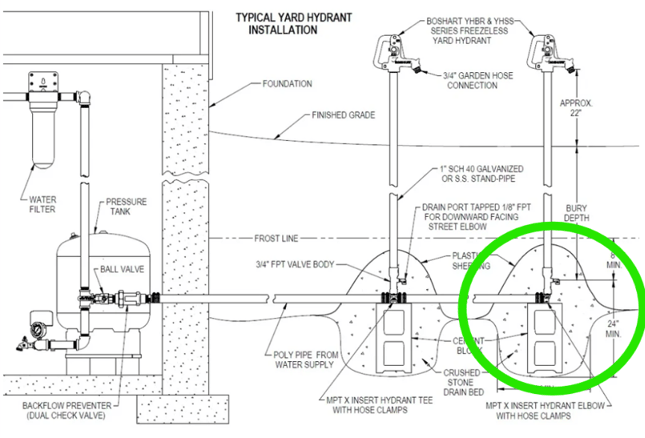
- Improper drainage: Failure to build a proper drain bed is a common reason why a yard hydrant cannot drain properly, or if the drain port (weep hole) is blocked. Either situation traps water inside the standpipe and valve body, which freezes and ruptures the valve body.
-
 Leaving a hose attached: Leaving a garden hose or an anti-siphon vacuum breaker on the spout creates a vacuum that prevents the water from siphoning back out of the hydrant. This causes ice to build up and split the valve body.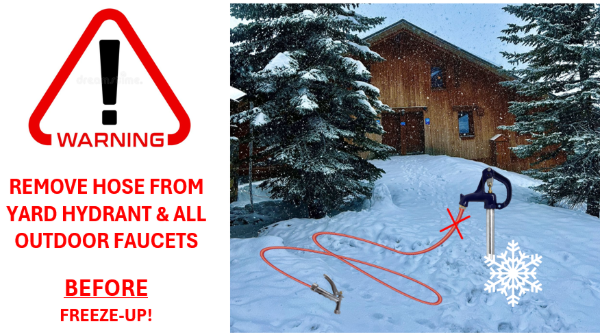
-
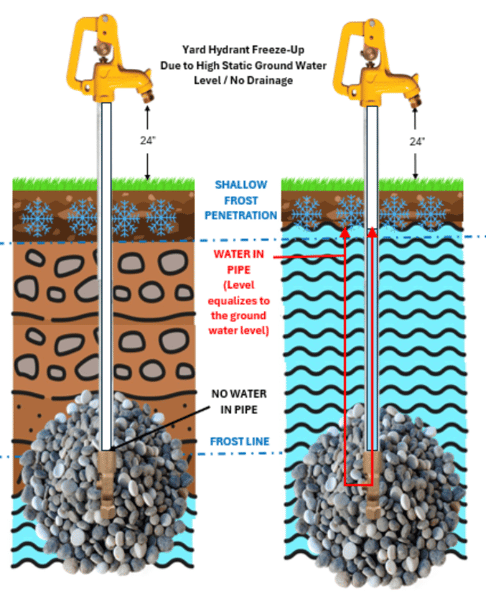
Rising ground water levels: Groundwater levels rise significantly during a wet, rainy year because excess precipitation naturally soaks into the soil and percolates downward to recharge aquifers. This replenishing process is called recharge, and it directly results in a higher water table. Depending on local geology and soil type, the water table can rise rapidly or take several weeks to build up as water filters through the ground. If this causes the water table to rise above the valve body, the hydrant cannot drain into the soil, leaving trapped water to freeze and burst the unit. A high-water table can sometimes be detected by noticing your sump pump is running more frequently, the high-water level can lead to localized groundwater flooding in basements or low-lying areas.
 Since water expands by roughly 9% upon freezing, creating immense pressure—up to 25,000 PSI—trapped in a confined space with no room for expansion this extreme, localized pressure, causes pipes, valves, and other components such as pressure gauges to split or burst.
2. Corrosion and Soil Conditions
- Electrolysis: Brass valve body castings installed in highly corrosive or acidic soils can quickly degrade.
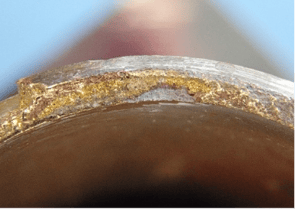
- Dezincification: Brass valve bodies can be adversely affected by dezincification corrosion. Brass dezincification is a form of selective leaching corrosion where zinc is preferentially dissolved from a brass alloy, leaving behind a porous, mechanically weak copper matrix. Because brass is primarily a combination of copper and zinc, this electrochemical reaction strips away the structural element (zinc), fundamentally compromising the component. Over time, this causes leaks or can make the casing highly vulnerable to extreme pressures caused by freezing.
3. Mechanical Stress and Installation / Repair Issues
-
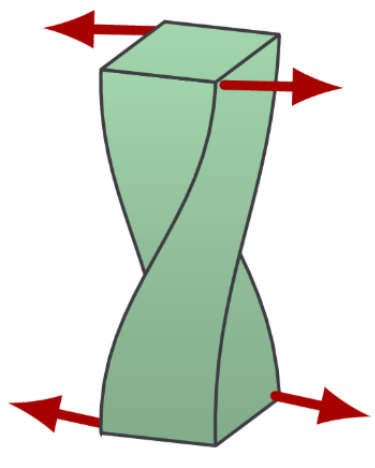
Failure to hold the standpipe hydrant repair: Failure to secure / hold the standpipe to prevent it from turning when removing the head casting will result in excessive force being transferred to the valve body connections. This can result in stress cracks on the valve body. Bronze and brass are more likely to stress crack than stainless steel valve bodies which are more durable.
-
Over Tightening: Overtightening of fittings into the yard hydrant inlet can stress crack the metal, especially if made from bronze or brass. Stainless steel valve bodies are more durable.
-
Ground shifting: If the ground freezes and expands (frost heave) or shifts under the weight of farm traffic, it can place immense physical pressure on the underground valve body and supply lines. This is more prone to occur if the brass valve body has any signs of dezincification corrosion.
Additional Resources:
https://support.boshart.com/yard-hydrant-troubleshooting-maintenance
https://support.boshart.com/how-do-i-install-my-yard-hydrant
https://support.boshart.com/yard-hydrant-installation-dos-donts
https://support.boshart.com/how-to-adjust-or-repair-boshart-yard-hydrant
https://support.boshart.com/are-yard-hydrants-safe-for-potable-water
https://support.boshart.com/boshart-yard-hydrant-identification