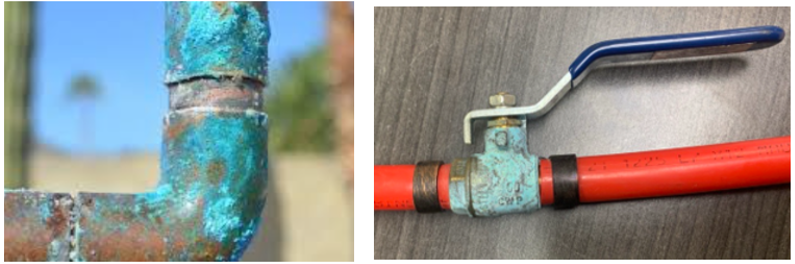
Dezincification is a form of corrosion and weakening of brass objects in which zinc is dissolved out of the brass alloy. Zinc leaches from the copper alloys in an aqueous solution. This leaves behind a porous and copper-rich structure that has reduced mechanical strength.
The first sign of dezincification might be a change in colour from the typical yellow colour of brass to an opaque pink of pure copper metal. The pink may turn reddish or even brown. It could take anywhere up to 30+ years, depending on the alloy, manufacturing and operating conditions for signs of dezincification to be visible. Brass alloys with more than 15% zinc content (yellow brasses) are subject to dezincification and are not suitable for direct burial.
Depending on water conditions, dezincification can happen quickly and cause product failure in short time periods, for example 3-5 years in highly aggressive environments. In less severe conditions the process can take decades.
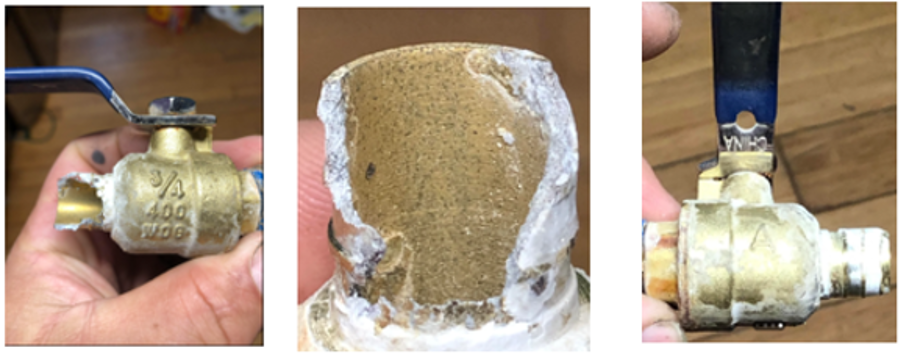
These deposits can build up inside your fittings and waters system’s pipes and can act like a blockage to an artery, narrowing the inside diameter of the pipe and can significantly reduce water pressure.
Important things to note about dezincification:
-
Brass alloys with more than 15% zinc content (yellow brasses) are subject to dezincification and are not suitable for direct burial.
-
Zinc deposits that leave casting can build up downstream inside plumbing system can act like a blockage to an artery and narrow inside diameter of the pipe.
-
Results in significantly reduced water pressure.
Greenish corrosion should not be confused with dezincification, it is oxidization of the copper and not as serious as dezincification. Green crusty or powdery build up forms a coating called a “patina” This is the natural oxidization process of copper accelerated by exposure to moisture and corrosive elements.