
Yes! Sand in water can lead to abrasive wear of the well pump, if your well pump has been or suddenly started to pump sand, it is a sign of a more severe problem. Pumping sand can rapidly destroy your pump and plumbing fixtures. We recommend that you contact a licensed well driller or pump contractor immediately to inspect the system. Some root causes of a sand problem require professional repairs such as a new well casing or screen. In other cases, the installation of a flow control may solve the problem.
The presence of sand or grit is not good and the source or cause should be investigated. If you have noticed that your pump has been pumping significant volumes of sand or silt that are clogging your pleated, string wound, or spun poly sediment filter cartridges before they have reached the normal life expectancy of 4-6 months between change outs, this is a sign of a serious problem with your water well. This can result in costly damage due to premature clogging of filters, and replacement of fixtures, appliances, and your water treatment system due to the wear caused by abrasive sand.
Effects of Sand on my Plumbing System
The presence of sand in a well water often can be detected through visible signs. Sand can make your water muddy or cloudy, or you may see sand settling at the bottom of glasses or toilet tanks for example. If left, the situation is not properly addressed and sand will accumulate within your plumbing system, leading to costly problems and repairs over time. Due to its abrasiveness, sand in the water will cause above average wear and tear, resulting in premature failure of your faucets, plumbing fixtures, and appliances.
SPIN-OUT FILTERS
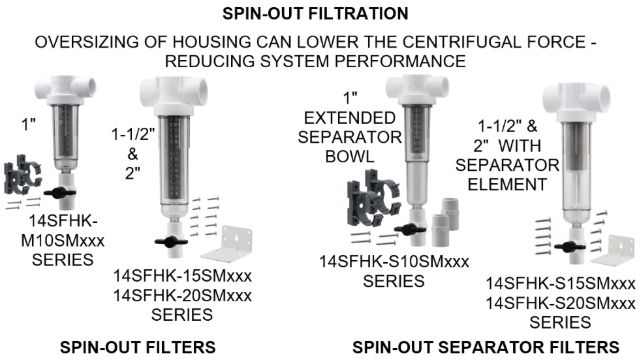 The installation of a Spin-Out Filter or a Spin-Out Separator Filter which has a built-in holding (sediment) chamber. This can be installed after the pressure tank. These filters use centrifugal forces to separate heavy sand particulate removing the high load of sediment before entering the finishing filter to remove the smaller particles that can pass through the coarse stainless mesh screen in the Spin-out filter.
Typically, 100 mesh screens will remove the sand and do not result in significant pressure loss. In some cases, the silt may require a finer mesh screen 250-500 or 100 Mesh.
These filters have a manually operated purge valve on the bottom to flush out the collected sand. They can be equipped with automatic flush valves if desired. This extends the life span of the traditional sediment cartridge in the finishing filter housing (secondary) filter which is plumbed in series to take out finer particulate down to 10, 5 or even 1 micron before it enters your home’s appliances, faucets and fixtures.
Four Common Causes of Sand / Sediment in Well Water
#1 - Well Pump is Oversized
In some cases, the well pump may have too high a pumping capacity. The pump may be pumping too many gallons per minute (GPM) drawing the water towards the well at too high a velocity. This rapid flow of water draws sand in from the surrounding aquifer.
 Solution: This problem can often be resolved by installing a FLO-TROL Model CD900 Flow Control to reduce the pumping capacity, resulting in a slower flow velocity of water into the pump. Slower water flow can often stop the sand from being drawn into the well when the well replenishes back to static water level after each pumping cycle.
#2 - Well Pump is Set Too Low in the Well
Most wells use submersible pumps which are installed down the well below the static water level in the well casing. The well pump is normally set so it is a minimum of 10 to 20 feet above the bottom of the well. If your pump has been pumping sand and sediment, it could be due to improper well pump placement, with the pump installed too low in the well near the bottom resulting in sand / sediment being drawn into the pump.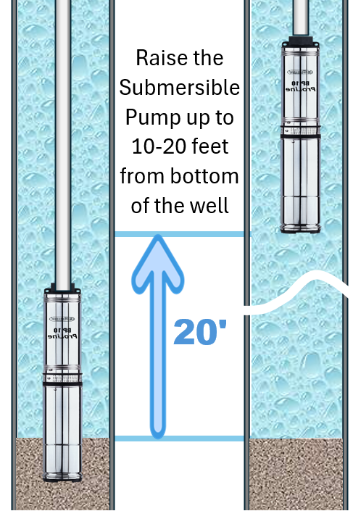
If your pump suddenly starts to pump sand and sediment, it may be that well casing is filling up with fine sand and silt so much that the level of sand is nearing the pump setting. In which case, the pump may start to suck in sand from this build-up, this is more common in older wells.
Solution: Sometimes, the well contractor can pull up the pump 10 to 20 feet to eliminate sand uptake.
#3 - Damaged or Corroded Well casing or Well Screen
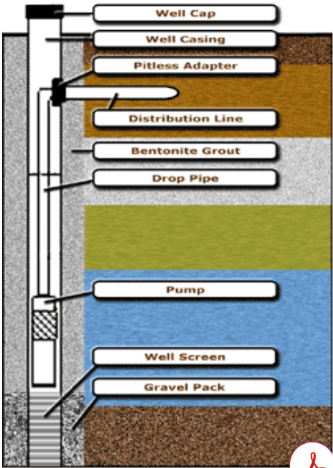 When the well is drilled, it is lined with steel, iron, or PVC plastic, called a well casing. The well driller installs the casing in the well shaft. A well screen is located at the bottom of the well casing, it has grooves that allow water to penetrate the well from the surrounding groundwater while keeping out sand and grit. The screen is positioned directly within the water-bearing aquifer. It acts as a strainer in the intake zone, attached to the bottom of the casing, and is placed below the water table to allow water in while blocking sediment.
The submersible well pump is installed inside this casing, and over time, the screen can degrade and / or become corroded, allowing silt and sand particles to get into the well and be pumped into your water system. If the sandy water has ruined the pump, you may need to replace it. A well professional can put a camera down your well and inspect the well screen to see if it has deteriorated or needs repair.
In some cases, installing a new well casing may be the best option, especially if the current one is too old or narrow to repair. Well contractors can sometimes install special screens over the pump to block sand. However, depending on the well’s condition or size, this is not always feasible.
#4 - Geological Conditions
When a deep water well is drilled through sandstone, limestone, or other sand-laden geological layers, fine sand can be introduced into the water supply. A local well driller will have a good understanding of the geological conditions of your area which is fundamental in identifying potential sources of sand in your well water. Their knowledge of the types of formations your well penetrates, is critical to properly troubleshoot and address the issues.
Shallow wells are usually 25 to 100 feet deep and may be sufficient in areas with higher water tables. However, they are more vulnerable to seasonal drying and contamination. They are particularly susceptible to sand issues, since they often draw water from less compacted strata (layers) that contain more sand particles.
Additional Resources:
https://support.boshart.com/how-to-build-a-submersible-pump-saver
https://support.boshart.com/flo-trol-model-cd900-constant-flow-control-valve-operation
https://support.boshart.com/what-mesh-rating-do-i-need-for-my-spin-out-filter-or-separator-filter