
Yes, a PVC check valve can be direct buried, however just because you can does not mean that you should! Direct burial does have potential risks.
It is not recommended to bury it directly in contact with the soil for the following reasons:
- Damage resulting from the compaction and shifting soil can crack the PVC or damage the valve.
- Damage resulting from rocks or stones that shift over time that can cause abrasion and wear on the valve body.
- Poor accessibility for service / replacement of the valve if it fails, plus the added risk of hitting the valve when digging it up for replacement.
Best practice for installation of a PVC check valve underground:
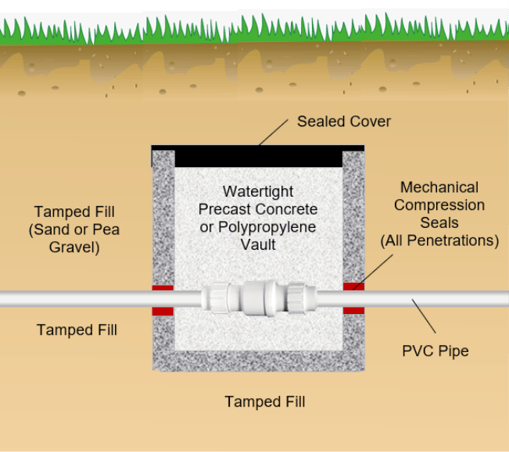
1. To protect the valve from heavy dirt loads and shifting earth, and because check valves require periodic replacement, they should always be housed in an accessible valve box or access vault.
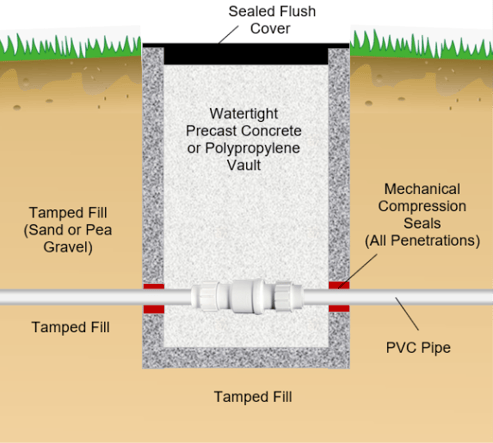
2. Backfill carefully, when back filling dirt around the box or the piping, use sand or pea gravel to prevent rocks and stones from impacting or cracking the PVC piping.
3. If you do not use a vault that is flush with the ground for easy access without digging, keep detailed records of the buried valve box location.
User Safety Responsibility Statement
The system designer, installer, end user, and/or Authority Having Jurisdiction (AHJ) are responsible for ensuring that all products are selected, installed, and used in compliance with all relevant national and local code requirements. Where the end user is also the installer, that individual assumes full responsibility for both installation and operation.
Conclusion:
At the end it is important that the risks be are evaluated, the final decision is up to the system designer / end user.