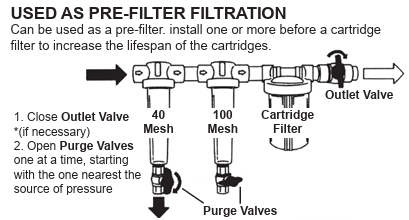
INSTALLATION:
1. During installation, adhere to all local plumbing/electrical codes and regulations.
2. The filter should be installed in a location that protects it from damage. Potential filter damage considerations should include impact, freeze, excessive heat, chemical contact, water hammer, and direct sunlight.
3. The filter should be installed within easy access for proper cleaning and maintenance. Purge valve drain line should be flexible tubing, or if using rigid pipe, install a union to allow removal of bowl and element. An air gap should be installed between the purge valve and drain to prevent backflow when water is not flowing.
4. Install the filter on the pressure side of the pump in the preferred vertical position with the purge outlet pointing down, whenever possible.
*There cannot be any check valves between the filter and the pressure tank.
5. We recommend the installation of a shut off valve on both the inlet and outlet sides of the filter (Fig. 4).
6. Refer to arrow on the filter head for correct water flow direction when installing the filter.
7. Install the purge valve. The use of a quality pipe joint compound approved for use with PVC is recommended. CAUTION: If using PTFE thread seal tape, uneven and/or over application of tape may result in valve failure due to stress cracking in all types of PVC/plastic fittings and valves. (Threaded filter connections that have O-Ring seals do not require thread sealant).
8. Remove the clear bowl from the PVC head prior to the gluing process, as any excess glue that comes in contact with the clear bowl will damage it, voiding the warranty (Fig. 1).
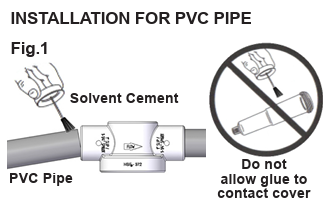
9. Use approved primer/solvent cement for gluing PVC connections. Follow instructions outlined on the container.
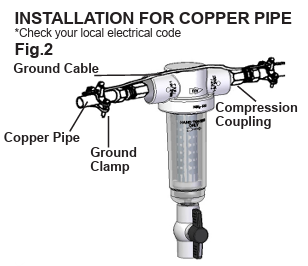
10. When installing on metallic plumbing, maintain proper electrical grounding. (Check your local electrical code* (Fig. 2). (*Do not over-tighten threaded connections*).
CAUTIONS:
1. Water purged through PVC flush valve must be drained to a safe location. Do not use a brass or metal ball valve for the flush valve, use PVC only.
2. Do not use wrenches on plastic filter parts. Hand tighten only, and no more than two turns past finger tight (use of tools will void warranty).
3. Silicone grease should be the only lubricant used on O-Rings.
4. Fluids other than water and some chemicals within water can degrade plastic water filter components. Degraded plastic filter components may lead to failure of the filter housing. Chemicals and plastic filter components should be evaluated with a chemical resistance chart and actual conditions for proper chemical compatibility.
CLEANING:
Purging Instructions:
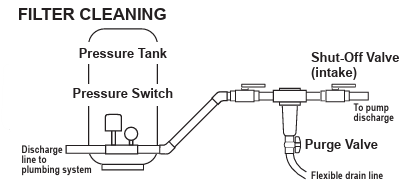
1. Ensure pressure tank is at full pressure. (Open a cold water tap until pump starts, then shut off tap and wait until pump shuts off).
2. Close valve on intake side of filter.
3. Open purge valve until sediment is flushed from filter. This usually only takes a few seconds.
4. Shut purge valve; open intake valve; turn on power; re-start pump. (On small pressure tanks, if there is not enough water in tank to fully flush the filter, repeat steps 1-4).
Cleaning Instructions:
1. The primary method of cleaning the filter is purging separated solids through the flush valve while the filter is under system pressure.
2. Occasionally the filter element may need to be manually cleaned. Shut off the water pump or supply (or isolate the filter by shutting valves around it) and drain the filter. Remove the clear cover and clean the element with a soft brush and water. Apply silicone grease to O-Rings if needed. Reassemble filter after cleaning. (Hand tighten only - Do not use Vaseline or any petroleum based product on rubber O-Rings).